



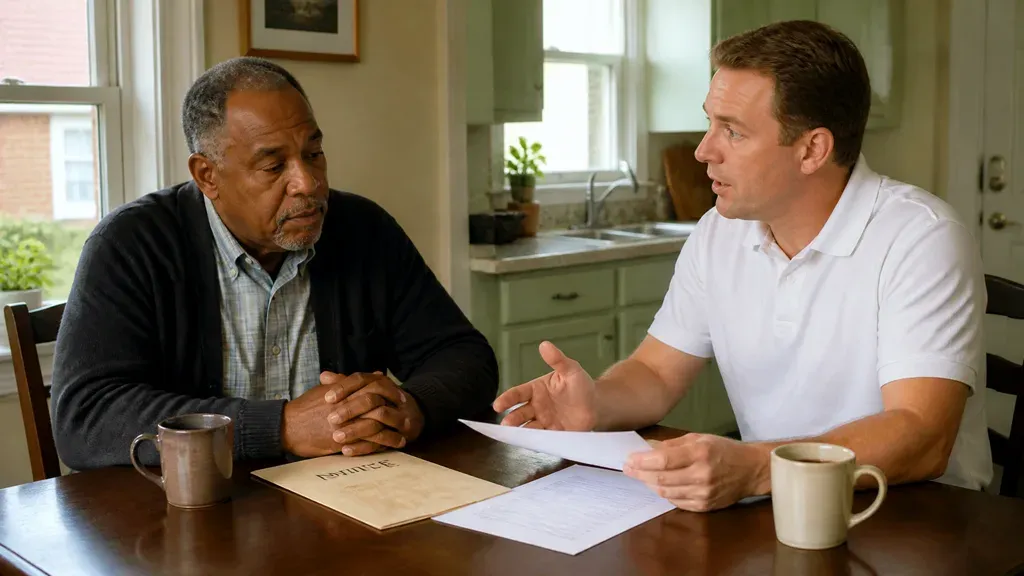
What Is a Short Sale?
A short sale is a real estate transaction in which a homeowner sells their property for less than the outstanding mortgage balance - and the lender agrees to accept the sale proceeds as full (or partial) satisfaction of the debt. The term "short" refers to the fact that the sale proceeds come up short of what is owed, not that the process is fast. Short sales became especially common in Michigan during the post-2008 housing downturn and remain a recognized option today.
Short sales require lender approval because the lender is being asked to take a loss. This distinguishes them from a standard home sale - you cannot simply accept a buyer’s offer and close without the lender’s sign-off when you owe more than the property is worth. The lender’s loss mitigation department must review and approve the proposed sale price before closing can happen.
How a Short Sale Works - Step by Step
The short sale process in Michigan involves several steps that run in parallel - you are working with the lender while simultaneously finding a buyer:
- Contact your lender’s loss mitigation department. Notify them you are experiencing financial hardship and want to explore a short sale. Get the name and direct contact information for the representative handling your file.
- Submit a hardship package. The lender requires documentation of your hardship - a hardship letter, bank statements, pay stubs or proof of income loss, tax returns, and a completed financial worksheet. The package demonstrates that you genuinely cannot afford the home and that a short sale is the best available resolution.
- List the property for sale. You list and market the home - typically with a real estate agent experienced in short sales, or by working directly with a cash buyer. The property is listed at or near current market value. Any serious buyer needs to understand that the sale is subject to lender approval and that the timeline is longer than a standard transaction.
- Accept an offer and submit to the lender. When you receive an offer, you submit it to the lender along with the buyer’s financial qualification documents, a net sheet showing what the lender will receive after closing costs, and the listing history. The lender then reviews the offer and orders their own appraisal or broker price opinion.
- Lender approval. The lender reviews the full package and either approves the short sale, counters at a higher price, or declines. Approval can take 30-120 days depending on the lender, the investor who owns the loan, and the complexity of the file. Some loans have mortgage insurance involved, which adds another layer of approval.
- Close the transaction. Once approved, the sale closes like a standard real estate transaction. The buyer pays the agreed price, the lender receives the net proceeds, and you are released from the mortgage per the terms of the short sale approval letter.
Benefits of a Short Sale Compared to Foreclosure
For Metro Detroit homeowners who are underwater on their mortgage, a short sale offers meaningful advantages over allowing foreclosure to complete:
- Less credit damage. A foreclosure is reported as a completed public record on your credit report and typically causes a larger score drop than a short sale, which is reported as a "pre-foreclosure in redemption" or similar notation. The practical impact varies by lender reporting, but short sales are generally viewed more favorably by future creditors.
- Shorter mortgage waiting period. After a short sale, you may be eligible for a new FHA mortgage in as little as three years - the same as foreclosure in most cases, but lenders often view short sales more favorably during the underwriting review, particularly if you can show the hardship was circumstantial rather than a pattern of irresponsibility.
- Possible deficiency waiver. When you negotiate the short sale, you can (and should) negotiate the deficiency balance as part of the lender’s approval. A written waiver of the deficiency is a standard ask in a short sale negotiation. Foreclosure in Michigan does not automatically eliminate deficiency exposure.
- You control the exit. In a short sale you choose your timeline (within the lender’s process), you know your move-out date, and you can coordinate your next housing situation without the uncertainty of a sheriff’s sale date and redemption period hanging over you.
- Potential relocation assistance. Some lenders and servicers offer financial incentives for successful short sales - sometimes called "cash for keys." This is not guaranteed but is worth requesting in your negotiation.
How Long Does a Short Sale Take in Michigan?
Timeline is one of the biggest frustrations with the short sale process. Here are realistic ranges:
- Straightforward case with one lender: 60-120 days from offer submission to closing is typical. Some lenders move faster with experienced short sale agents or when the file is clean and well-documented.
- Multiple loans or mortgage insurance: Add 30-60 days for each additional approval required. A first and second mortgage, or a loan with private mortgage insurance, means multiple parties must approve the sale.
- Complex files or lender backlogs: Some short sales take 6-9 months or longer. Servicer backlogs, lost paperwork, and multiple rounds of review are common frustrations.
Working with a cash buyer who has short sale experience can reduce some of the friction - cash buyers have no financing contingency that can expire, and they can remain committed through a longer approval timeline without the pressure that financed buyers face from mortgage commitment deadlines. In communities like Marine City, Melvindale, and Milan, where appraisal values and buyer pools are limited, a committed cash buyer is often essential to getting lender approval in a reasonable timeframe.
Tax Implications of a Short Sale
When a lender forgives part of your mortgage balance through a short sale, the IRS may treat that forgiven amount as taxable income - and you may receive a 1099-C (Cancellation of Debt) form the following January. As with deed in lieu and foreclosure, exclusions may apply:
- Principal residence exclusion: Federal law has provided exclusions for cancelled mortgage debt on a primary residence. Check current IRS guidance or consult a tax professional for current applicability.
- Insolvency exclusion: If your total debts exceeded your total assets at the time the debt was cancelled, you may qualify for the insolvency exclusion under IRS Form 982.
Do not ignore a 1099-C - but also do not assume it automatically creates a large tax bill. Work with a Michigan CPA before and after the short sale closes to understand your exposure.
Is a Short Sale Right for Your Situation?
A short sale makes the most sense when:
- Your mortgage balance is higher than the current market value of your home (you are "underwater")
- You have a documented financial hardship - job loss, medical crisis, divorce, or significant income reduction
- You cannot afford to continue making payments and are approaching or already in default
- You want to avoid the full credit damage and public record of a completed foreclosure
- You have enough time to work through the lender approval process before the sheriff’s sale date
A short sale may not be the best fit if the loan has significant mortgage insurance, if you have a second mortgage that is unlikely to approve a short payoff, or if time is so short that the approval process cannot realistically complete before foreclosure finalizes. In those cases, exploring a direct cash sale - where the buyer pays enough to cover the mortgage in full - may be a cleaner path that avoids both short sale complexity and foreclosure entirely.
Exploring Your Options in Metro Detroit
If you are behind on your mortgage and trying to figure out the best path forward, Chris Buys Homes Detroit can give you a no-obligation cash offer on your property as it sits today. If a direct sale covers your mortgage balance, you close clean and avoid both short sale and foreclosure. If the balance is above current value, we can talk through whether a short sale with us as the buyer is a workable option. We work with homeowners across Wayne, Oakland, and Macomb Counties who need a real solution - not just more paperwork to fill out. A fresh start is possible, and the right path often becomes clear once you know what your options actually are.
Contact us today or call (313) 217-9851. No pressure, no obligation - just an honest conversation about your home and your situation.