


If you want to stay in your house and a program can fix the roof or furnace, staying is usually the better choice. We buy houses as-is, and we would still tell you to apply first.
This guide covers the programs listed as of November 2026, who qualifies, what they cover, what to do while you wait, and how to tell when a sale makes more sense.
What home repair programs does Detroit offer homeowners?
The City of Detroit runs two main repair programs, Critical Home Repair and Detroit LeadSafe Housing, and nonprofit and state programs fill some of the gaps. Most are free to the homeowner, and most have limited funding.
As of November 2026, these are the main options:
- Critical Home Repair (City of Detroit). Free repairs for owners who qualify. BridgeDetroit reported that the city's page lists severe plumbing problems, leaking roofs, a broken boiler or furnace, electrical hazards and accessibility repairs. Only the most critical repairs are funded, and funding is limited. Pre-applications ran from September 9 to September 22, 2026.
- Detroit LeadSafe Housing (City of Detroit). A free program that removes lead paint hazards in homes built before 1978 where a child under 6 lives or visits, or a pregnant woman lives. When emergency repairs are needed and funding allows, some other repairs can be added. It covers 16 Detroit ZIP codes. The same September application covered both programs.
- State Emergency Relief (Michigan DHHS). A grant for repairs that remove a direct threat to health or safety, including furnace repair or replacement. Apply through MI Bridges.
- Weatherization (Wayne Metro). Insulation and other energy work based on a home energy audit. The University of Michigan guide is clear that it is not a repair program.
- Neighborhood and nonprofit programs. The University of Michigan's Detroit Home Repair Resource Guide lists dozens more, some limited to one neighborhood. It was updated in July 2026 with intake status as of April 2026.
Some programs you may have heard of are not open. The 2026 guide lists the city's Renew Detroit program and the Detroit Home Repair Fund as temporarily closed. The city's 0% Interest Home Repair Loan Program was dropped from the guide in May 2025, and we could not confirm that it is taking applications. Ask the city before you count on any of them.
The Detroit Housing Resource HelpLine at (866) 313-2520 can tell you what is open now.
Who qualifies for Detroit's home repair loans and grants?
Most Detroit repair programs require you to own and live in the house, meet an income limit and be current on property taxes or in a payment plan. Each program adds its own rules.
For Critical Home Repair in September 2026, BridgeDetroit reported these requirements:
- You have owned and lived in the house for at least one year.
- You are current on property taxes or in a payment plan.
- You have not received a City of Detroit grant before.
- A child under 18, a senior 62 or older, or a person with a documented disability lives in the home.
- Household income is within the 2026 federal limits. For a three-person household, the cap was $56,640.
LeadSafe requires a home built before 1978, a child under 6 or a pregnant woman in the home, and household income at or below 80% of the area median or a child on Medicaid. State Emergency Relief requires that you own the home and live there, and that housing costs are not more than 75% of the household's net income.
The tax rule matters. If you are behind on property taxes, a Wayne County payment plan or the city's HOPE exemption can make you eligible again. The Detroit Housing Network helps homeowners with both at the HelpLine number above.
How long is the wait, and which repairs do the programs cover?
The city does not publish a wait time for its repair programs. Applications open in short windows, selected households get the most critical repairs, and funding does not cover everyone who applies.
What each program covers, from the sources below:
- Critical Home Repair: plumbing, roofs, boilers and furnaces, electrical hazards and accessibility repairs, with only the most critical funded. It may not fix everything a house needs.
- LeadSafe: lead paint hazards first, through abatement or window and door replacement, plus some emergency repairs when funding allows.
- State Emergency Relief: furnace repairs up to a lifetime maximum of $4,000 per household, and other essential repairs such as water heaters up to $1,500. If the estimate is higher, you pay the difference first.
- Weatherization: insulation and energy upgrades only. No one service is guaranteed.
The need is far larger than the funding. Outlier Media reported in March 2026 that experts put Detroit's unmet home repair need at more than $1 billion, and that the city was spending a little over $20 million on home repair that fiscal year. When you apply, ask how many applicants a round can serve and when you will hear back.
What can you do while you wait for a repair program?
Keep your eligibility intact, protect the house from more damage and apply to more than one program. A few steps help:
- Stay current on property taxes, or get into a payment plan. Most programs require it.
- Apply for HOPE if your income is low. The University of Michigan guide shows some programs require a HOPE application.
- Apply to every program you qualify for. The city's one application covered both Critical Home Repair and LeadSafe in September.
- Apply for State Emergency Relief through MI Bridges if the furnace or water heater fails.
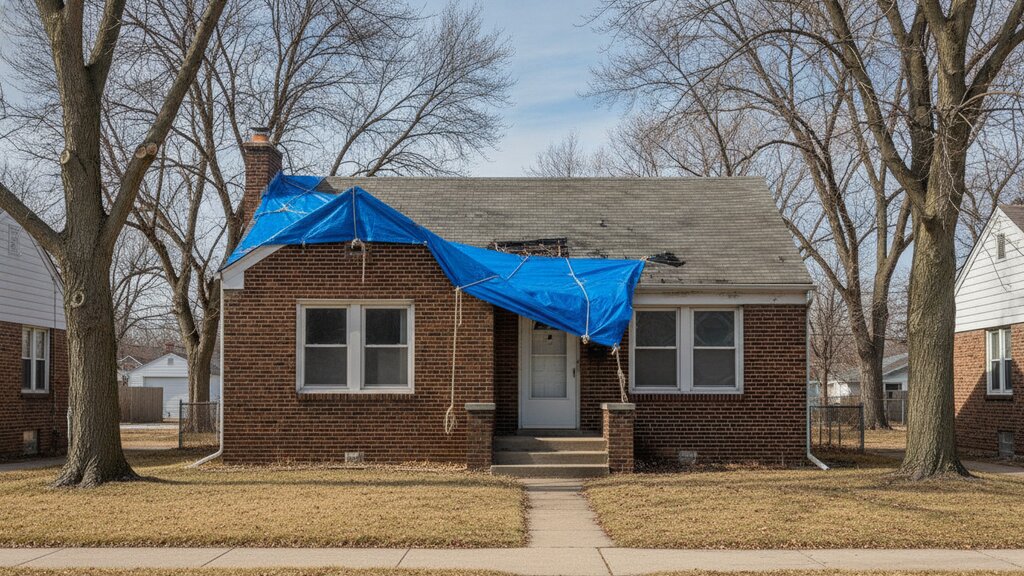
- Slow the damage. A tarp on a roof leak or a shut-off valve on a burst pipe can keep a small repair from becoming a large one.
- Keep records. Photos, contractor estimates and dates help with a program application, an insurance claim or a sale later.
If you get on a program list, ask what happens if your situation changes, such as moving in with family or putting the house up for sale.
When does selling the house as-is make more sense than repairing it?
Selling makes more sense when the repairs are beyond what any program covers, when you already plan to move, or when you do not qualify and cannot finance the work. If a program will fix the house and you want to stay, stay.
Some situations where a sale is worth comparing:
- The repairs are bigger than a program will fund. Critical Home Repair funds the most critical items, and it may not reach foundation work, a full gut or several systems at once. Our guide to selling a house with foundation problems covers one of those cases.
- You do not qualify. Outlier Media's reporting describes owners who earn too much for income-based programs and too little to pay for repairs.
- You plan to move anyway. Health, family or work may already be pulling you elsewhere.
- The house is inherited or empty. Programs require the owner to live in the house, so a vacant or inherited house usually does not qualify.
A buyer who purchases as-is prices the repairs into the offer. In the words of our FAQ: "We pay fair prices, but not always full market value. For houses needing repairs, we calculate fair prices by subtracting repair costs." We buy as-is, with no repairs, no cleaning, no showings and no agent commission. Our fixer-upper page explains how that works with us.
Get more than one number. A listing with an agent may bring more if buyers can finance the house as it is. A cash offer gives you a set date: we can make an offer within 24 hours, and we can close in as little as 7 days when the title is clear; 30 to 60 days is typical.
Frequently asked questions
Does Detroit offer free roof replacement for seniors?
Detroit offers free roof repairs to some seniors through Critical Home Repair, which covers leaking roofs for households with a member 62 or older that meet the income limit. The program funds only the most critical repairs, and the last window closed on September 22, 2026. The Renew Detroit program was listed as temporarily closed in the 2026 University of Michigan guide. Call (866) 313-2520 for the next opening.
Is the Detroit 0% home repair loan really interest free?
The Detroit 0% Interest Home Repair Loan was interest free when it was running. LISC Detroit described zero-interest loans from $5,000 to $25,000 when it profiled the program in 2018. The University of Michigan guide dropped the program in May 2025, and we could not confirm that it is open now. Ask the city about current status and any closing or recording fees before you apply.
Can I get help with a broken furnace in Detroit in winter?
Yes, State Emergency Relief from the Michigan Department of Health and Human Services can pay to repair or replace a broken furnace. The lifetime limit for furnace work is $4,000 per household, and you pay any amount above it. You must own and live in the home, and it must not be listed for sale. Apply through MI Bridges, and call the HelpLine at (866) 313-2520 for other options.
Do repair programs put a lien on my house?
It depends on the program, and the city's published program details do not say. A loan is a debt you repay, and a grant may come with its own conditions. Ask in writing what you are signing and whether anything is recorded against the house. If there is a lien or recorded agreement, it would be paid off from the sale at closing if you sell later.
Can landlords use Detroit home repair programs?
Landlords can use some Detroit programs, but not Critical Home Repair or State Emergency Relief, which require the owner to live in the house. Detroit LeadSafe accepts landlords whose rental is registered with the city, is in one of the 16 eligible ZIP codes and houses a qualifying tenant. Weatherization also serves rental homes that meet federal rules.
Can I sell my house while I am on a repair program waitlist?
Yes, you can sell your house while on a waitlist, but you will likely give up the repair. Most programs require the owner to live in the home, and State Emergency Relief will not pay for repairs on a home listed for sale. If you are close to the top of a list and want to stay, it may be worth waiting. Ask the program what a sale would mean.
Your choice
If a program will fix the house and you want to stay, apply and stay. If the repairs are more than a program can carry, our fixer-upper page shows how we buy houses as they are, and you can reach us through contact us or at (313) 217-9851.
Sources
- BridgeDetroit: Detroit home repair programs re-open: Who qualifies, how to apply (September 8, 2026)
- University of Michigan Poverty Solutions: Detroit Home Repair Resource Guide 2026 (PDF)
- Michigan Public and Outlier Media: Detroit has made headway on home repair. It's still a $1B problem (March 7, 2026)
- LISC Detroit: 0% Interest Home Repair Loan Program Helps Detroit Couple Preserve Their Family Home (2018)
- Detroit Housing Network: Homeowner Services